Investment News | 18 February 2026
Why Derby? – A commercial agent’s perspective
 Salloway
As one of Derby’s leading commercial property agents, Salloway Property Consultants regularly deals with businesses who choose Derby as a place to invest.
Here, Will Speed, a surveyor at Salloway, explains why.
As a commercial property surveyor working in Derby, day-in, day-out, I’m often asked the same question: Why Derby?
The simple answer is that it consistently delivers.
From where I sit at Salloway Property Consultants, Derby continues to prove itself as one of the Midlands’ most reliable — and increasingly undersupplied — industrial markets.
Demand hasn’t wavered, yet supply of well-located, well-designed modern space remains tight.
When good schemes come forward, they move quickly.
Recent activity across the city really underlines the depth of occupier demand.
Take Merlin Park, Derby’s newest industrial development. We were delighted to acquire the site from Rolls-Royce on behalf of our longstanding clients, Ivygrove.
Even before practical completion, we had agreed pre-lets, and the scheme is now approaching full occupancy.
That level of early commitment tells you two things: the strength of the location and the lack of comparable new-build stock in the area.
Dunstall Park tells a similar story. Again, acquired on behalf of Ivygrove, the scheme was fully occupied upon completion.
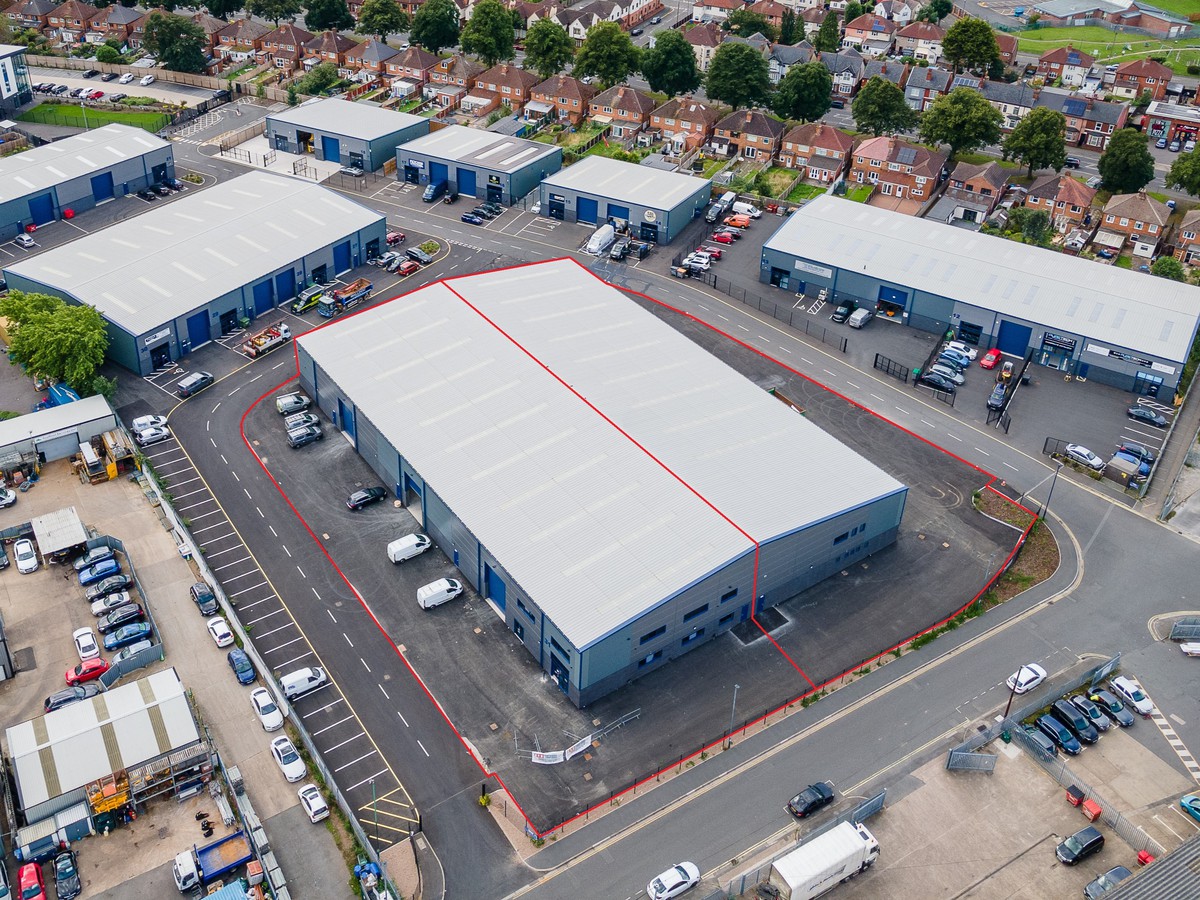
With units ranging from approximately 2,000 sq ft to 15,683 sq ft, it attracted a real mix of occupiers.
That breadth of demand – across multiple size brackets – is something we see time and again in Derby.
As an agent, that’s exactly what you want to see: well-designed modern accommodation meeting genuine, proven demand almost immediately.
If I’m honest, Derby’s biggest challenge isn’t demand — it’s land, and where the next new build commercial development will be.
This under supply coupled with competitive bidding for sites and rising construction costs means that in order to deliver new schemes, rents and capital values need to continue to grow otherwise the delivery of these new build commercial schemes will slow.
Viable brownfield sites are becoming increasingly scarce, and competition for well-located plots is intense.
Our acquisition of the former Albert Looms site in Spondon on behalf of Ivygrove, is a good example.
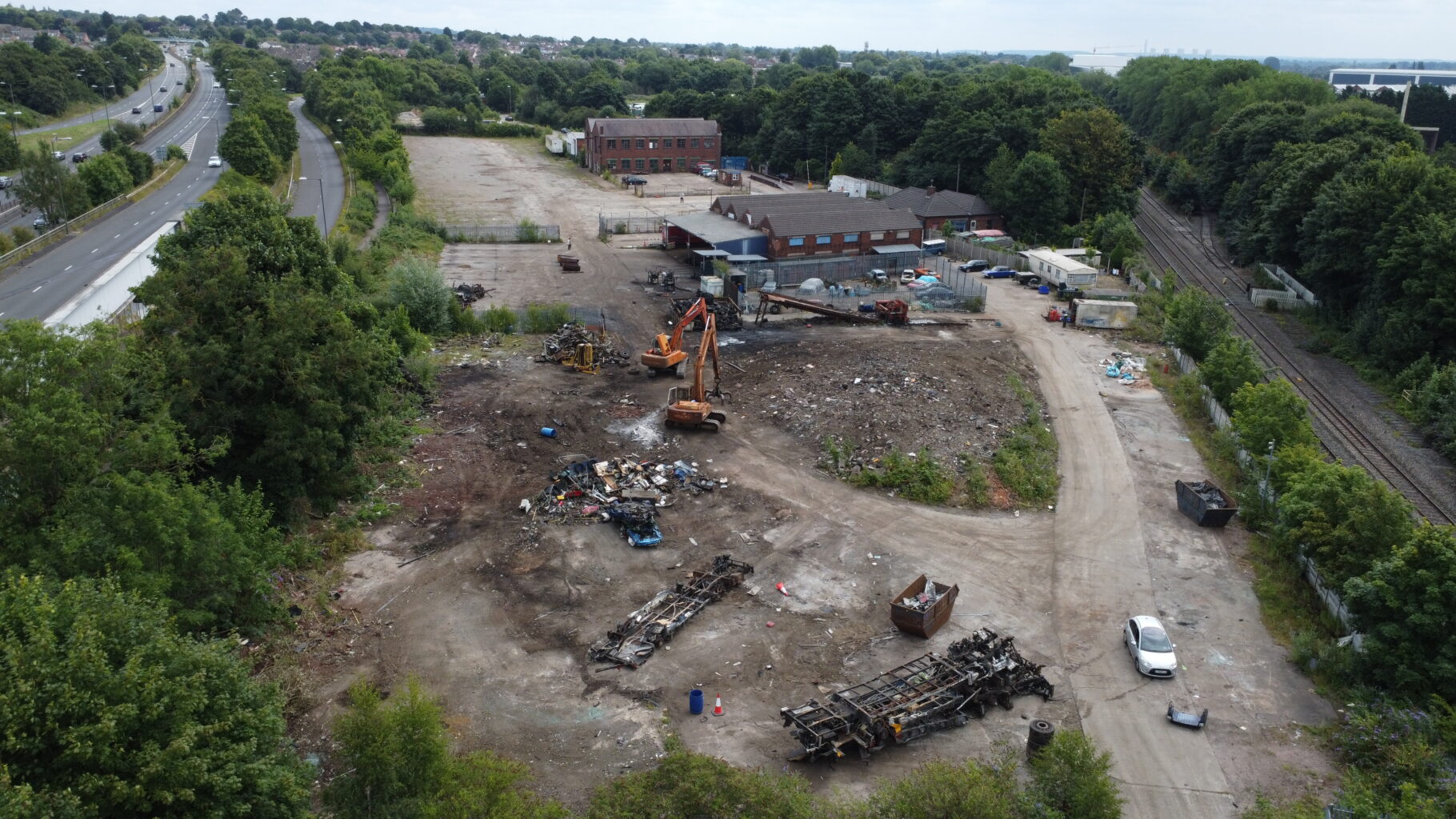
When opportunities like that come to market, they don’t hang around and the developer will be competing against other similar bidders together with owner occupiers.
However, there is a confidence in the market that well located, new build schemes will continue to appeal to businesses and tenants and testament to this, is that we are already in dialogue with a pre-sale at this site.
A knock-on effect of the shortage of land is that developers/owner occupiers will switch their focus to repurposing existing/older industrial units and in turn this will drive rents and capital values of the ‘second hand’ market.
Whilst this isn’t necessarily a negative as second-hand rents and values rising will also drive new build rents and values, the issue is that the level of industrial stock remains the same.
Looking ahead, I expect to see more focus on redevelopment and repurposing older industrial stock.
Refurbishment and reconfiguration of outdated space is no longer a “nice to have” – it’s becoming essential.
If we want to continue meeting occupier demand in a land-constrained market, we need to be smarter with the space we already have.
One of the clearest trends I’m seeing on the ground is the continued popularity of smaller “starter” units — typically up to around 2,500 sq ft.
These units are often the entry point for growing local businesses that need practical warehouse space with a modest office component.
When delivered on a modern estate with good access and parking, they generate strong interest every time.
From an agent’s perspective, these units are consistently among the quickest to let.
They form the backbone of many successful schemes in Derby and provide a crucial stepping stone for expanding occupiers.
Another interesting shift I’ve noticed is the evolving makeup of industrial estates.
Merlin Park again is a good example. Drive In Golf chose to locate there, reflecting a wider national trend: industrial estates are no longer purely industrial.
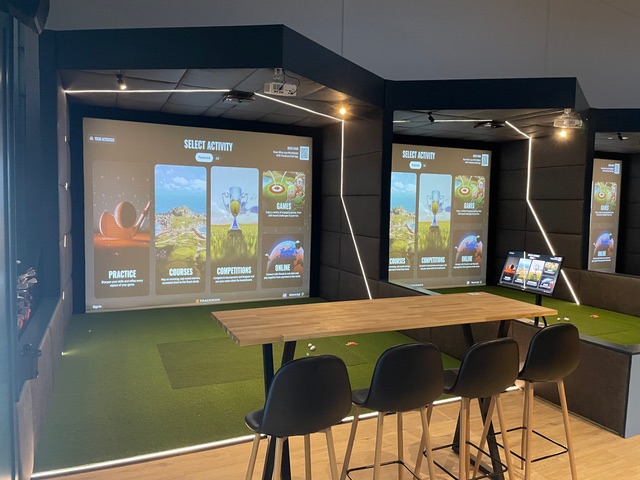
Leisure and lifestyle operators are increasingly part of the mix.
Nigel Bratton, director of Drive in Golf, explained why Merlin Park was so attractive to him, “We had been looking for a property in Derby that offered us the internal space, parking and accessibility for over four years. Merlin Park was perfect on all fronts. When you are wanting to brand yourself as premium, having a premium looking space that is built well is vital. It was a super slick process with Salloway, from initially seeing the advertisement on their website, to site visits the whole process was efficient and super professional.
“The brochure provided on the units really sold it from first sight. Everything laid out clear and immediate contact when enquiring.”
Another good example is food and beverage operators – Greggs being the obvious example – who have almost become a standard feature on modern estates.
These uses enhance schemes, increase footfall and add to their overall appeal. It’s a more blended, dynamic environment than we would have seen ten years ago.
Despite the strong take-up, there are still a handful of opportunities remaining at Merlin Park.
We currently have units of approximately 4,069 sq ft and 5,426 sq ft available for immediate occupation, along with four further units of around 4,069 sq ft completing at the end of March.
There is also a prominent roadside unit of approximately 2,583 sq ft, which would suit a food and beverage operator looking for visibility on one of Derby’s main arterial routes.
Opportunities that combine new-build quality with that level of prominence are increasingly rare in the Derby market.
From my perspective, Derby is performing exactly as a strong industrial market should.
Schemes are letting quickly. Occupiers are varied and committed. Demand continues to outstrip supply – particularly for modern, well-specified space.
Yes, land constraints present challenges. But they also create opportunity for thoughtful redevelopment and carefully considered schemes. For those active in the market, the fundamentals remain very sound.
That’s why, when I’m asked “Why Derby?”, my answer is straightforward: because the demand is real, the market is resilient, and well-executed projects continue to succeed.