Latest News | 23 September 2026
How EMCCA is helping to shape the future of the region
 East Midlands Combined County Authority (EMCCA)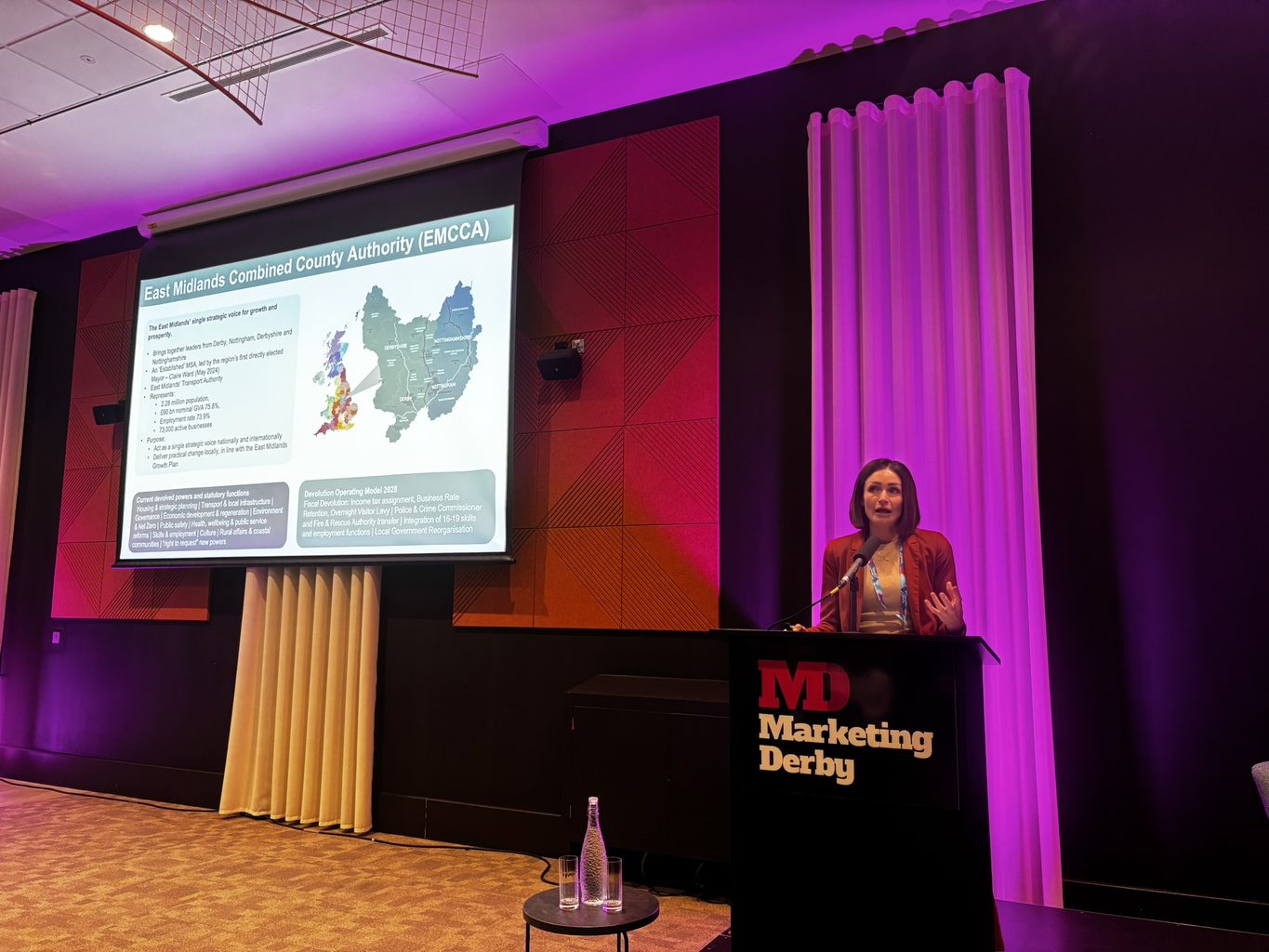
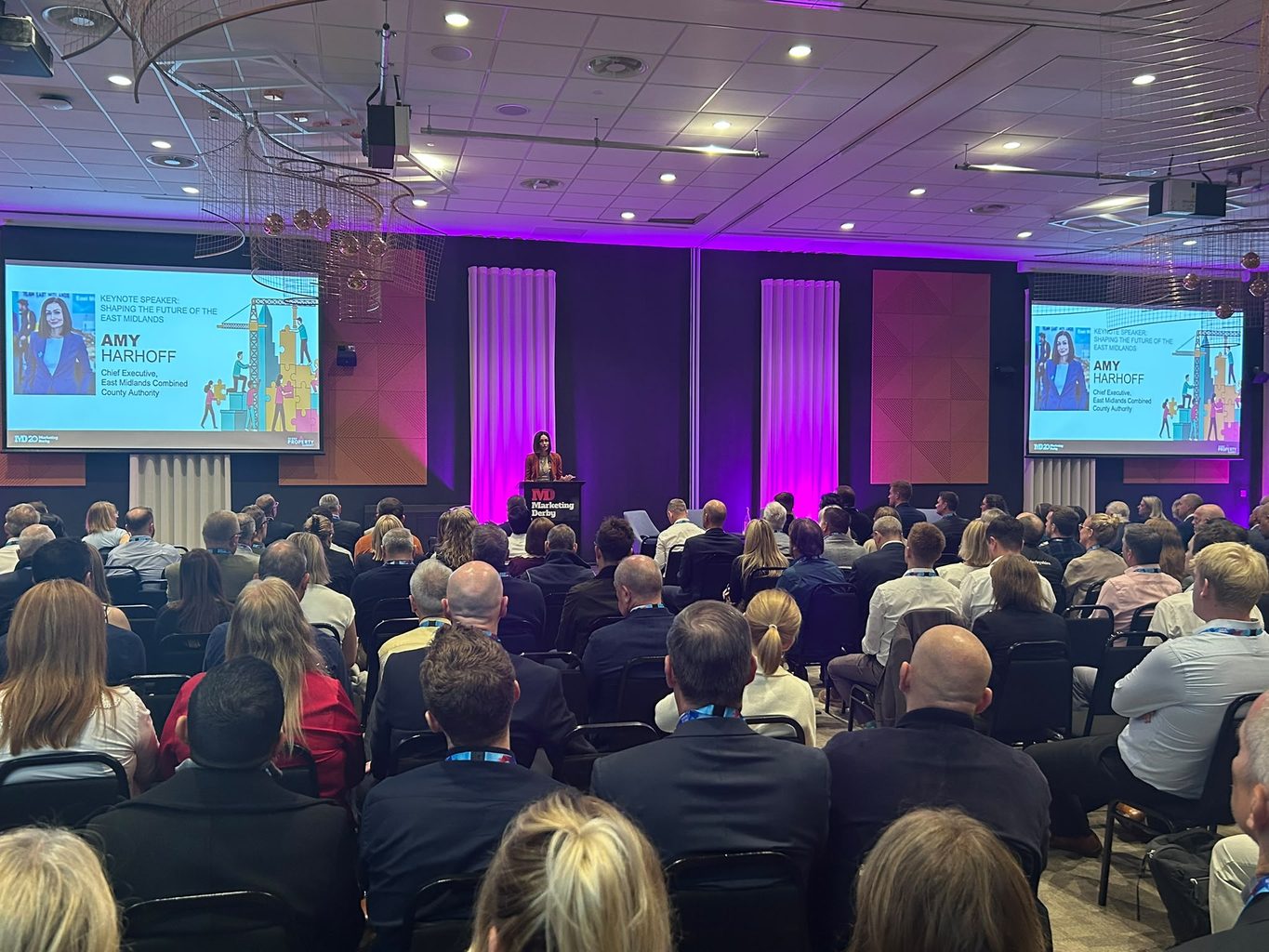
This year’s Derby Property Summit heard about the key role the East Midlands Combined County Authority is playing in helping Derby – and the region – achieve growth.
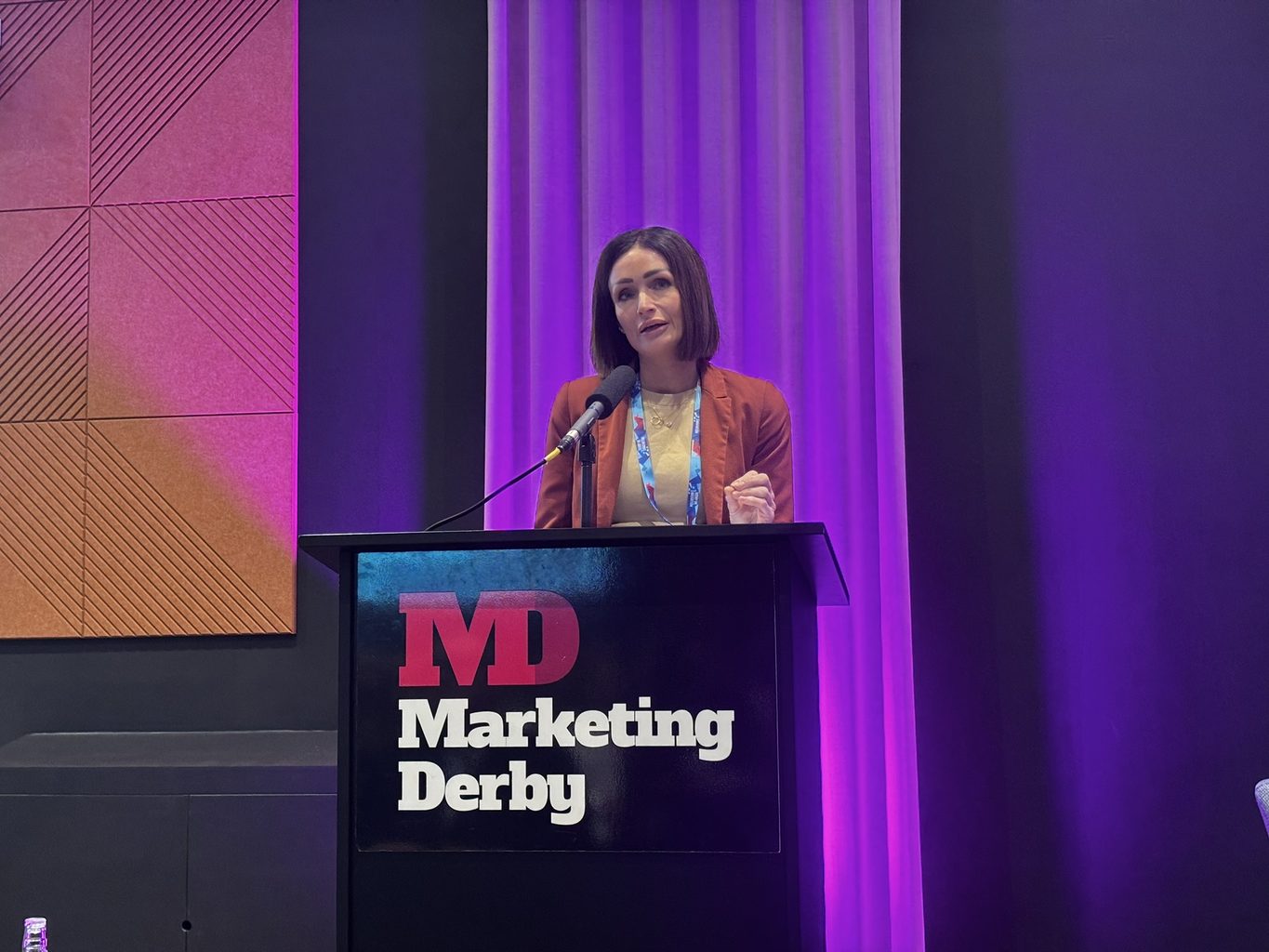
In her speech, Amy Harhoff, chief executive at EMCCA, explained the purpose of the regional mayoral authority – and its ambition for the East Midlands.
But before she did, firstly she commented on the rapid change she was seeing in Derby.
She said: “I’ve been in post for nearly two years and I can’t believe the progress Derby has made already.
“I know we have a lot to do, but as somebody who has worked in a lot of places across the country, I take my hat off to the team at Derby.
“What’s coming out of the ground here is impressive. All of us who work in regeneration will know these developments do not happen by accident or on their own.”
She then turned to the role of EMCCA – and the key role regional authorities are set to play under Prime Minister Andy Burnham with extra powers going forward, describing it as a “genuinely exciting time to be involved”.
As the regional governing body for Derby, Derbyshire, Nottingham and Nottinghamshire, EMCCA – led by Mayor Claire Ward – leads on matters including transport, skills and adult learning, housing, net zero and economic growth.
Working with partners and local authorities, EMCCA is securing investment to help places in the East Midlands – including Derby – to unlock opportunity, shape places and improve lives.
Covering a population of 2.28 million – and 73,000 active businesses – EMCCA aims to act as a single strategic voice both nationally and internationally.
Amy said: “We are one of the largest mayoral authority regions in the country – and because of that we’ve got heft and scale.
“We’ve also got a track record – such as having one of the UK’s most important global primaries in our region, such as Rolls-Royce.
“We’re a region that is not just big but also very capable of a national conversation.”
EMCCA aims to deliver practical change locally, in line with the East Midlands Growth Plan.
Over the next 10 years, that plan aims to get over 60,000 more people into work, give 210,000 more people skilled qualifications, see over 100,000 new homes built, add £13 billion to the economy, invest over £2 billion in transport infrastructure and create an addition 1GW of clean community energy generation.
Amy said: “Having a Growth Plan sets out a really clear ambition for what we want to achieve for our region.”
On housing and planning, Amy explained that the region was already reaching its expected National Planning Policy Framework targets.
However, she acknowledged there were challenges, particularly when it came to the delivery of affordable housing.
She said: We’ve got a lot to play for – but also a lot to do as a region. We want to do much, much more to support the creation of more social and affordable housing.”
In terms of partnerships, Amy talked about the geographical advantage of the East Midlands.
She said: “I don’t think our most important statistic is how long it takes to get to London on a train.
“I think those pan-regional relationships are more important – where we have an almost panoramic view of other places, such as Greater Manchester, South Yorkshire, the West Midlands and Greater Lincolnshire.
“There are a lot of industry relationships in our patch, which then drive a different way for the East Midlands to influence and create relationships with different places.
“That’s unique – and we need to make sure we’re making the best of those relationships.”
She then outlined EMCCA’s six growth cluster areas, which included the Trent Arc.
Connecting Derby and Nottingham, the Trent Arc aims to deliver 30,000 new homes, 40,000 jobs, a £2.4 billion GVA uplift and 2.7 million sq metres of new commercial space.
Amy said: “The Trent Arc recognises the massive opportunities in Derby – but it also looks at how to make it a collective corridor for the region.”
Key to supporting the region’s growth will be EMCCA’s Spatial Development Strategy (SDS).
Supported by new powers under the Devolution Bill, the SDS will provide strategic planning that can help elevate the priorities of the region, coordinating the bigger picture to unlock good growth and infrastructure investment.
Amy said: “This doesn’t take away from the importance of local planning – it’s about working at regional level to articulate where and how we do growth – and work with local authorities to make it happen.”