Latest News | 3 February 2026
Branding expert gives top tips on how to survive Dragons’ Den
 Q Branch Consulting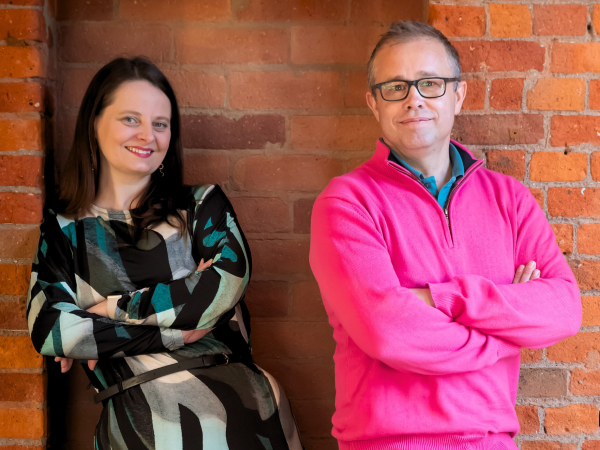
The co-founder of Q Branch Consulting has shared his top tips on how to win pitches on TV’s Dragons’ Den after working on the production crew in his formative years.
Last week, series 23 of the iconic show, which sees entrepreneurs pitch for investment from the ‘Dragons’, began airing on BBC1.
Matt Cluttherham, from Q Branch Consulting, which helps transform brands – and humans – said his time working behind the scenes on Dragon’s Den when in his 20s first inspired his move from TV production into business.
Now he has shared valuable insider tips from working on the show with the aim of helping businesses understand how to craft successful pitches – whether in the infamous ‘Den’ or not.
Q Branch Consulting helps businesses create a new direction through a combination of brand strategy, operational excellence and personal growth for the leadership team.
Matt, who started out in TV and theatre production, said: “Working on Dragon’s Den was what got me hooked on strategy, and brand strategy in particular. It sparked my move from events and production into business.
“What airs is heavily edited. Some founders spend 90 minutes or more being grilled. Every number, claim, and weakness is torn apart. Only a small percentage of pitches make it to air. Some are too boring, some too chaotic and some are legally complicated.
“You wait hours before stepping into the Den. Founders sit in green rooms, sweating and rehearsing, sometimes all day – which ramps up the pressure.
“TV producers do provide some coaching on pitches, but they can’t save bad ideas. Entrepreneurs will be prepped to sharpen their story. But if the business or strategy is weak, no polish can hide it.”
Matt has shared common, but hidden, mistakes that many founders make in the Den.
He said: “Many people talk at the Dragons instead of with them. Founders often treat the pitch like a monologue – rehearsed, polished, bulletproof.
“But the Dragons aren’t passive judges; they want a conversation. When a founder fails to read body language, adapt their tone, or invite engagement, they miss the chance to build rapport.
“And if a Dragon doesn’t connect with you, they won’t invest – no matter how good the numbers are.
“The best pitches feel like conversations, not presentations.”
Matt also says that too many people on the show get overly obsessed with their product – and do not stop to think whether there is a demand for it.
He said: “The Dragons are looking for commercial potential. Is there proof of demand? Can it scale? How will it be sold? What’s the route to market?
“Founders who can’t shift from “what it is” to “how it makes money” get eaten alive.
“Dragons often lose interest halfway through because the founder hasn’t shown the business model.
“But what kills more deals that most people realise is confusing confidence with arrogance.
“Founders walk in thinking they need to be bulletproof, but when that crosses into defensiveness, stubbornness, or dismissing feedback, it’s game over.
“The Dragons aren’t just investing in an idea; they’re investing in a relationship. If you can’t take criticism in the Den, they assume you’ll be a nightmare outside it.
“The real truth is that investors would rather work with someone coachable and underprepared than someone cocky and perfect.”
Having spent valuable time working on the show, Matt said there were lessons he had taken into business that he learned while on Dragon’s Den.
He said: “Incredible products stumble because the brand, messaging, or positioning is generic or confused.
“Most founders underestimate the power of distribution. Dragons care more about how you’ll get it in people’s hands than the product or service itself.
“First impressions are critical. The Dragons decide in the first 60 seconds whether they’re intrigued. The rest is just confirmation.”