Big Read | 31 July 2026
Why every business should consider putting societal impact at their heart
 MacMartin
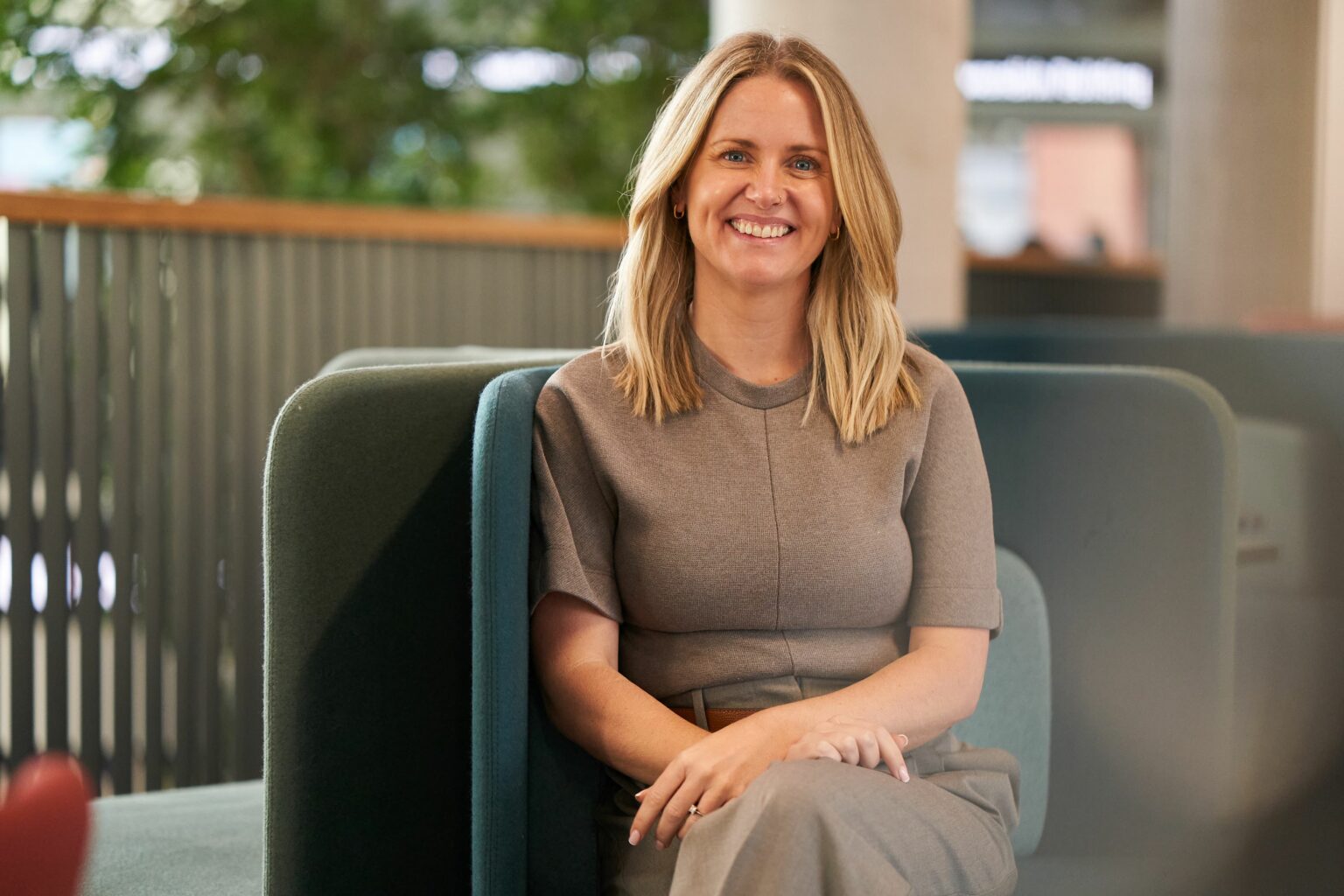
Three years ago, creative agency MacMartin announced it was pivoting to focus on creating marketing campaigns to encourage people to change their behaviour for the better. Here, in her own words, Claire MacDonald, co-founder and director of teaching and learning at MacMartin, explains why she believes ‘societal impact’ should underpin everything a company does.
I still remember the moment we decided to put societal impact closer to the heart of our business.
It was a few years ago, and we put together a pitch for a behaviour change campaign for a local police force, raising awareness of the dangers of one-punch assaults – the very real threat of someone on a night out killing another person with a single strike.
We’d never undertaken this type of work before, but the team wanted to go for it.
We got through to the final two, and although we didn’t win, we all agreed we’d enjoyed it.
More than that, the whole team came alive while working on it, digging into what actually motivates people to do this.
The work lit a fire in us, and we realised that working on something which could genuinely make a difference in the wider world really appealed to us.
Don’t get me wrong, we enjoy what we do, bringing creativity to the B2B space for our clients.
But there was something about the work – motivated by more than simply making money – that made our hearts sing.
That realisation ended up steering the direction of our marketing firm, which now also creates behaviour change campaigns built on behavioural psychology, aimed at influencing people to make the right decisions, to everyone’s benefit.
I’m not suggesting every company needs to make that same commitment, but no firm can afford to operate today without considering how it can make a difference while still making a profit.
The two don’t need to be entwined, but nor should they be mutually exclusive – because, contrary to what many assume, a genuine commitment to ESG (Environmental, Social and Governance) principles is far more than window-dressing.
What used to be a nice-to-have is now a must-have: being seen to do the right thing is no longer an advantage, it’s an expectation.
In marketing terms, societal impact refers to the meaningful, lasting effect an organisation has on communities and society at large, beyond its immediate commercial goals – initiatives that improve wellbeing, reduce inequality, create jobs and preserve natural resources.
It should be embedded in every marketing strategy and decision, in brand development and internal comms, underpinning everything a company does.
Every stakeholder should understand a company’s values and how it seeks to improve the world around it.
No company can afford to neglect this any longer, which is why we’ve added a new module on societal impact to our marketing courses.
Things didn’t used to be this way, but the need to be seen doing the right thing is everywhere now – from governments signing up to agreements like the Paris Climate Agreement, which filter down through legislation into business expectations, to any company seeking a business award or tender, where communities and investors now expect it.
Investors aren’t just chasing the highest return; they want their money going into companies that act responsibly, while consumers – especially younger ones – expect the brands they buy from to share their values.
There’s undoubtedly a value-behaviour gap at work here: the gulf between what people say they care about and what they actually do, often thanks to cost or inconvenience.
Marketers can help close that gap, making “doing the right thing” simply a matter of buying from the right brand, with no extra effort required.
The same applies to recruitment – money matters to young people, but so does working somewhere that matches their beliefs, and a company that demonstrates this will attract the best talent.
It might sound cynical, but it’s anything but, provided a company’s values are authentic and embedded right across its operations – from the suppliers it chooses to its carbon footprint, from working practices to the causes it supports.
Plenty of companies have been found wanting here, but many others have benefited from finding a wider purpose.
According to McKinsey’s ESG/Growth Trifecta (2023) study of 2,200 public companies, financially successful firms integrating ESG priorities into their growth strategies outperform their peers – those outperforming across ESG, profit and growth together produced two percentage points of total shareholder return above peers who outperformed on financial metrics alone.
There are real benefits at SME level too. With a smaller turnover and tighter budget, embedding societal impact into your operations and marketing can unlock real commercial advantages.
A credible ethical position gives customers a reason to choose you over a cheaper or better-known competitor, and people will pay more for products they perceive as ethical from a trusted supplier.
Doing good in the local community – where most SMEs win their business – builds a kind of loyalty no ad spend can buy.
Embedding ethical supply chain practices reduces exposure to scandal or reputational damage down the line, while impact-led practices like reducing waste and improving energy efficiency also cut costs.
Staff stay longer somewhere their work matters, and a coherent set of values gives them both a framework for decisions and a shared sense of direction – and they love being part of a team doing something to make life better for other people.
These aren’t just abstract thoughts – since our own corporate reset, we’ve seen all these benefits play out.
Better-quality website traffic has come through behaviour-change search terms, and standing out in a crowded marketplace has helped us attract work both locally and across the UK.
But the biggest benefit has been aligning with the kind of work our staff genuinely wanted to do, which has helped enormously with retention and recruitment.
Putting societal impact at the heart of what we do meant we really came alive; it created a feelgood factor that galvanised the whole company and changed our direction.
This would be possible anywhere – though the SMEs that benefit most are those where societal impact reflects a genuine founding conviction, rather than a communications strategy bolted on afterwards.
Everything you do should be backed by real internal commitment, sustained long-term.
Apply the societal impact lens to every operational decision, and don’t communicate it externally until you’ve actually delivered it operationally.
As our own company shows, this isn’t as hard as it sounds – because if it feels real, it is real.
And that’s when the magic starts.